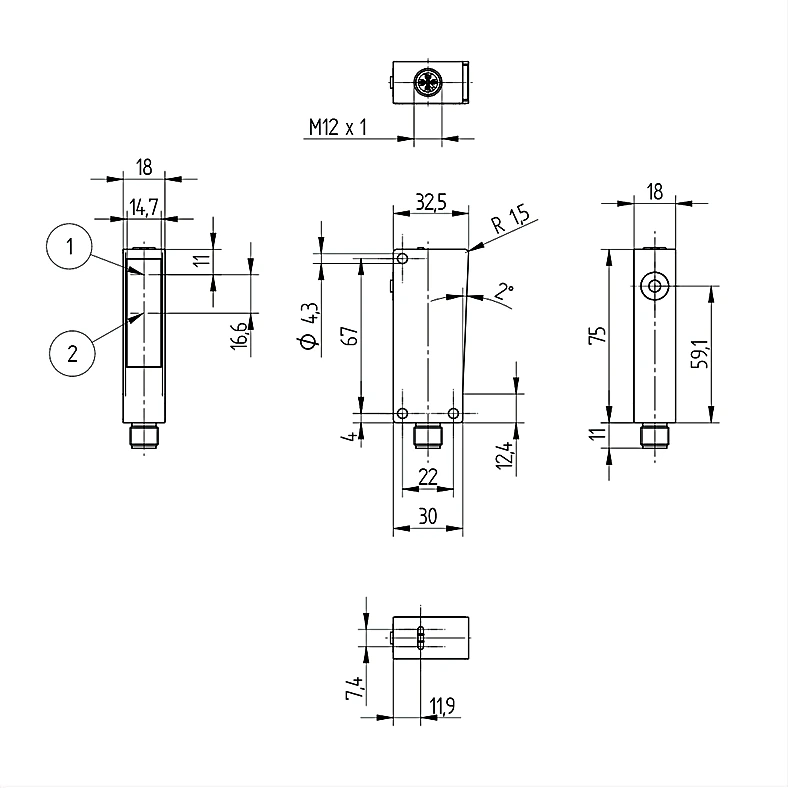
Wenglor P1NH308 Reflex Sensor with background suppression electronic
Reflex Sensor with background suppression electronic.

$464.00
Part Number
- P1NH308
Highlights...
- P1NH308
- By Wenglor
- FREE Shipping on orders of $2,000 or more
Overview
Features
- High-end
- IO-Link 1.1
- Data storage
- Wireless settings via NFC
- Teach-in
- Two independent switching outputs
- Range: 500 mm
- Setting Range: 60 to 500 mm
- Switching Hysteresis: < 3 %
- Light Source: Red Light
- Service Life (T = 77°F): 100,000 h
- Max. Ambient Light: 10,000 Lux
- Optical axis: Aligned
- Switching point: Calibrated
- Principle: Triangulation
- Supply Voltage: 15 to 30 V DC
- Supply Voltage with IO-Link: 18 to 30 V DC
- Current Consumption (Ub = 24 V): < 20 mA
- Switching Frequency: 150 Hz
- Switching Frequency (1 Switching Output): 800 Hz
- Response Time: 3.3 ms
- Response time (1 switching output): 1.25 ms
- Temperature Drift: < 5 %
- Temperature Range: -40°F to 140°F
- Switching Output Voltage Drop: < 2 V
- Switching Output/Switching Current: 100 mA
- Short Circuit Protection: yes
- Reverse Polarity Protection: yes
- Overload Protection: yes
- Interface: IO-Link V1.1
- Data Storage: yes
- Protection Class: III
- Setting Method: Teach-in/NFC
- Housing Material: Plastic, ABS/PC
- Degree of Protection: IP67, IP68
- Connection: M12 × 1; 4-pin
- Optic Cover: Plastic, PMMA
- Weight: 28 g
- MTTFd (EN ISO 13849-1): 1,094.99 a
- Scope of delivery: 1 × initial start-up instructions, 1 × sensor
- NPN NO: yes
- IO-Link: yes
- NFC interface: yes
- Output: Push-pull, NPN, PNP
- Circuit: NC, NO, NC/NO
- Other parameters: Off-delay, On-delay, Mode of operation, Hysteresis, Switching point, Emitted light
- Detection Range: 60 mm, 250 mm, 500 mm
- Light Spot Diameter: 11 mm, 13 mm, 15 mm
- Complementary Products: Dust Extraction Tube STAUBTUBUS-03, IO-Link Master, Set Protective Housing Z1NS001, Software
Description
The reflex sensor with background suppression works with red light according to the angle measurement principle. It has a IO-Link interface with a data storage function as well as additional configuration and diagnostic options. The interface can also be used to configure the sensors (PNP/NPN, NC/NO, switching distance, error output), as well as for reading out switching statuses and distance values. The teach-in function also provides another configuration option. Two independent switching outputs can be used, for instance, to monitor minimum and maximum values of distances or fill levels and stack heights.
Documents
Other
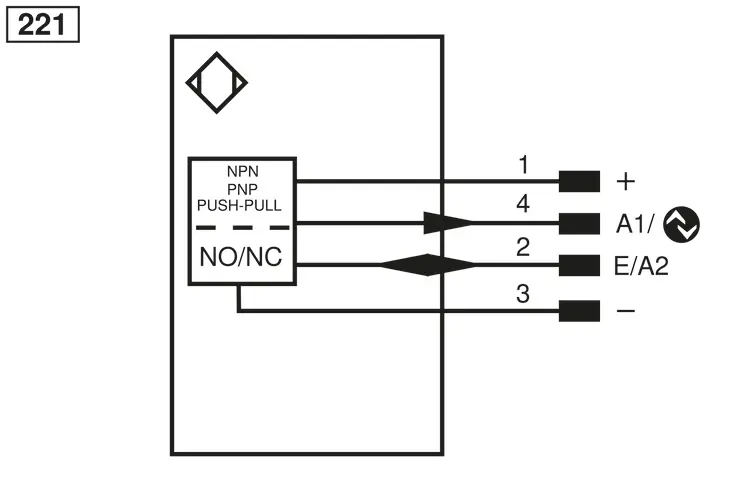
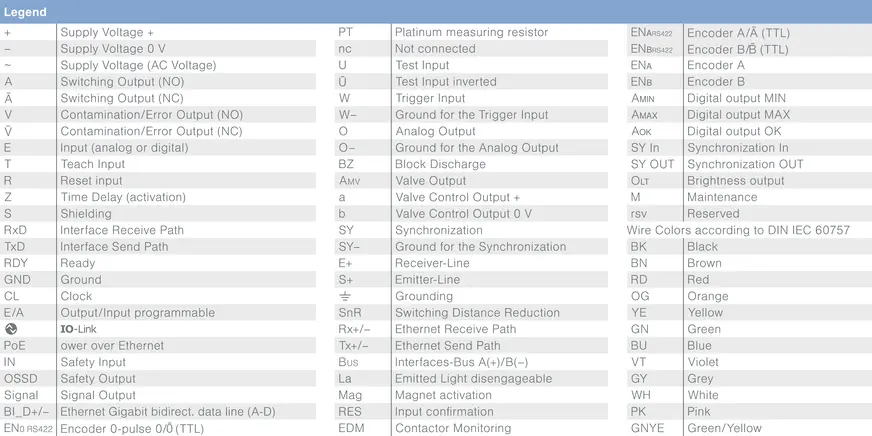
- Wenglor P1NH308 Reflex Sensor with background suppression electronic Connection Diagram-1 (28 KB)
- Wenglor P1NH308 Reflex Sensor with background suppression electronic Connection Diagram-2 (38 KB)
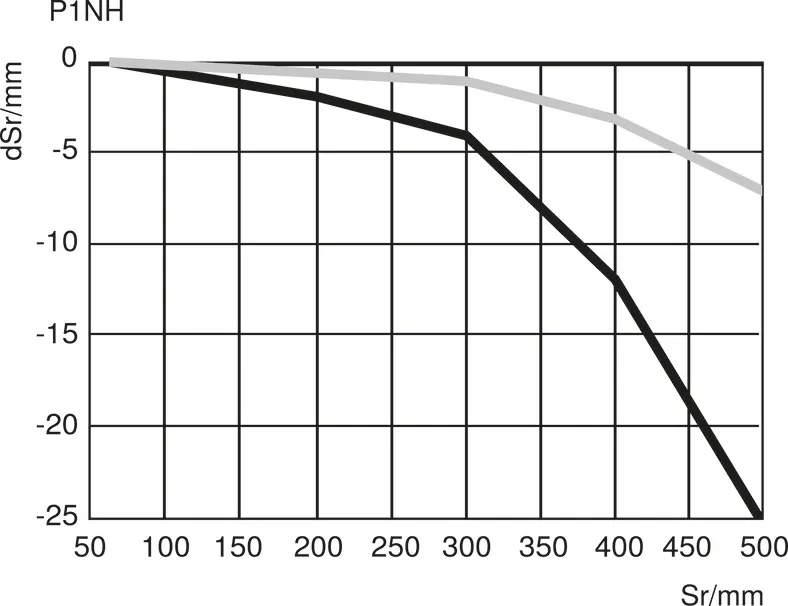
- Wenglor P1NH308 Reflex Sensor with background suppression electronic Switching Distance Deviation-1 (40 KB)
- Wenglor P1NH308 Reflex Sensor with background suppression electronic Switching Distance Deviation-2 (0 KB)
- Wenglor P1NH308 Reflex Sensor with background suppression electronic Switching Distance Deviation-3 (0 KB)
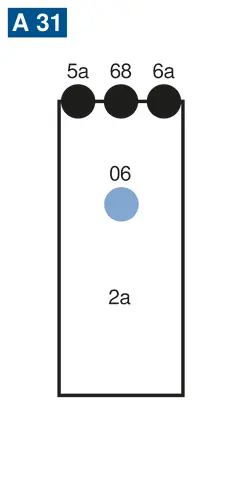
- Wenglor P1NH308 Reflex Sensor with background suppression electronic Ctrl Panel (44 KB)
- Wenglor P1NH308 Reflex Sensor with background suppression electronic Dimensioned Picture (26 KB)
Need Help? Call an engineer at 1-802-880-3123
We're open 8:00 am to 5:30 pm ET