Wenglor P1NE203 Through-Beam Sensor
Through-Beam Sensor.

$238.00
Part Number
- P1NE203
Highlights...
- P1NE203
- By Wenglor
- FREE Shipping on orders of $2,000 or more
Overview
Features
- Condition monitoring
- High light intensity with large switching reserve
- IO-Link 1.1
- Test input for high operational reliability
- Range: 60,000 mm
- Smallest Recognizable Part: see table 1
- Switching Hysteresis: 10 %
- Light Source: Red Light
- Service Life (T = 77°F): 100,000 h
- Max. Ambient Light: 10,000 Lux
- Optical axis: Aligned
- Switching point: Calibrated
- Sensor Type: Receiver
- Supply Voltage: 10 to 30 V DC
- Supply Voltage with IO-Link: 18 to 30 V DC
- Current Consumption (Ub = 24 V): < 30 mA
- Switching Frequency: 1,000 Hz
- Switching Frequency (interference-free mode): 500 Hz
- Response Time: 0.5 ms
- Response time (interference-free mode): 1 ms
- Temperature Drift: < 10 %
- Temperature Range: -40°F to 140°F
- Switching Output Voltage Drop: < 2 V
- Switching Output/Switching Current: 100 mA
- Residual Current Switching Output: < 50 µA
- Short Circuit Protection: yes
- Reverse Polarity Protection: yes
- Overload Protection: yes
- Interface: IO-Link V1.1
- Protection Class: III
- Setting Method: Potentiometer
- Housing Material: Plastic, ABS/PC
- Degree of Protection: IP67, IP68
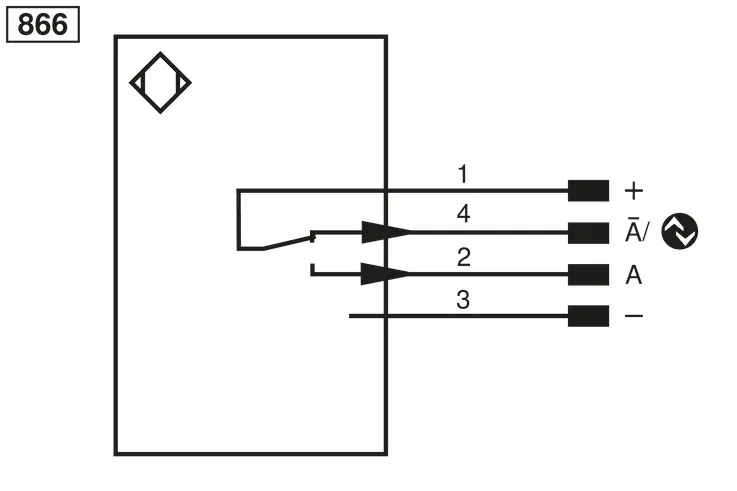
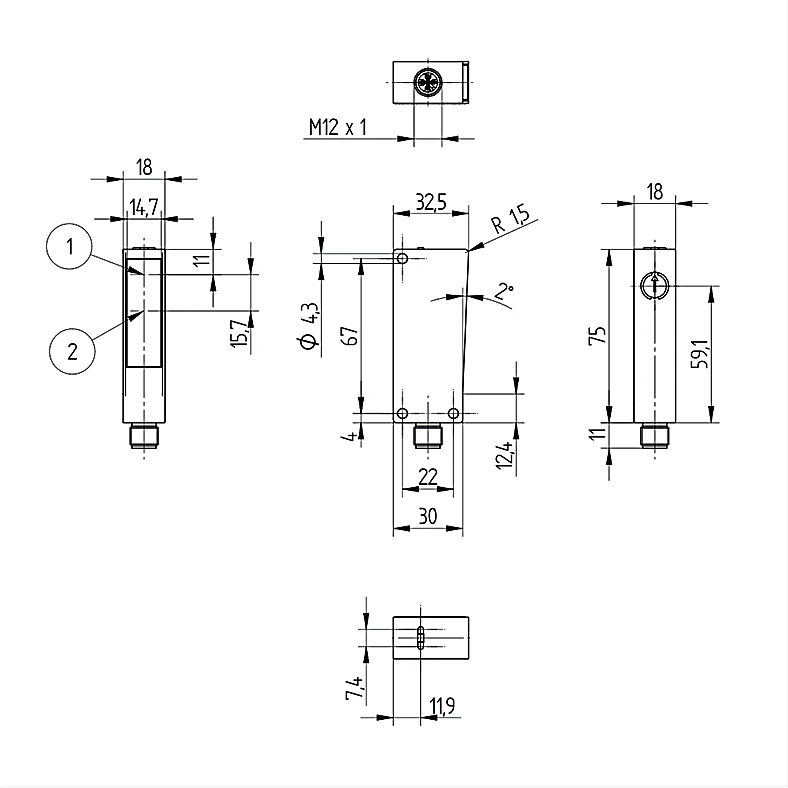
- Connection: M12 × 1; 4-pin
- Optic Cover: Plastic, PMMA
- Weight: 30 g
- MTTFd (EN ISO 13849-1): 1,790.32 a
- Scope of delivery: 1 × initial start-up instructions, 1 × sensor
- PNP NC, PNP NO: yes
- IO-Link: yes
- Output: Push-pull, NPN, PNP
- Circuit: inactive, Error output, NC, NC+NO, NO
- Other parameters: Off-delay, On-delay, Mode of operation, Hysteresis, Switching point
- Distance transmitter/receiver: 12 m, 30 m, 60 m
- Smallest Recognizable Part: 6 mm, 2 mm, 1,5 mm
- Complementary Products: Dust Extraction Tube STAUBTUBUS-03, IO-Link Master, Set Protective Housing Z1NS001, Software
Description
The through-beam sensor works with red light as well as a transmitter and a receiver. Thanks to their high light intensity, the sensor provides a high degree of operational reliability even with interferences like steam, fog or dust. The transmitter can be deactivated using test input in order to test the functionality of the through-beam sensor. The IO-Link interface can be used to configure the sensor (PNP/NPN, NC/NO, switching distance), as well as for reading out switching statuses and signal values.
Need Help? Call an engineer at 1-802-880-3123
We're open 8:00 am to 5:30 pm ET