Wenglor P1KY002 Laser Distance Sensor Time of Flight
Laser Distance Sensor Time of Flight.

$627.00
Part Number
- P1KY002
Highlights...
- P1KY002
- By Wenglor
- FREE Shipping on orders of $2,000 or more
Overview
Features
- Secure detection of black objects also in extremely inclined positions with wintec
- No mutual interference with wintec
- Interference-free towards gloss in the background with wintec
- Reliable in case of glossy objects with wintec
- Miniature design
- Working Range: 0 to 1,000 mm
- Setting Range: 100 to 1,000 mm
- Switching Hysteresis: < 20 mm
- Light Source: Laser (red)
- Wavelength: 680 nm
- Service Life (T = 77°F): 100,000 h
- Laser Class (EN 60825-1): 1
- Beam Divergence: < 16 mrad
- Max. Ambient Light: 10,000 Lux
- Light Spot Diameter: see table 1
- Triple Dot Laser: yes
- Reflector required: no
- Supply Voltage: 10 to 30 V DC
- Current Consumption (Ub = 24 V): < 30 mA
- Switching Frequency: 1,000 Hz
- Response Time: 0.5 ms
- Temperature Drift: < 2.5 %
- Temperature Range: -40°F to 122°F
- Number of Switching Outputs: 2
- Switching Output Voltage Drop: < 2.5 V
- PNP Switching Output/Switching Current: 100 mA
- Short Circuit Protection: yes
- Reverse Polarity Protection: yes
- Overload Protection: yes
- Protection Class: III
- FDA Accession Number: 1620293-001
- Setting Method: Potentiometer
- Housing Material: Plastic, ABS/PC, Plastic, PC
- Optic Cover: Plastic, PMMA
- Degree of Protection: IP67
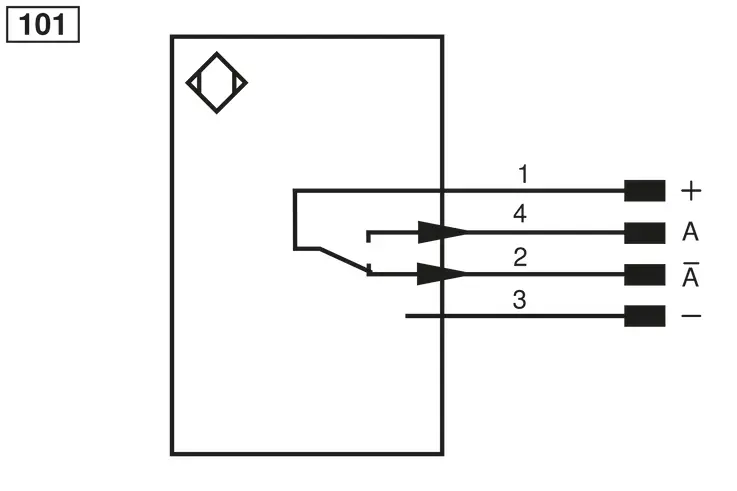
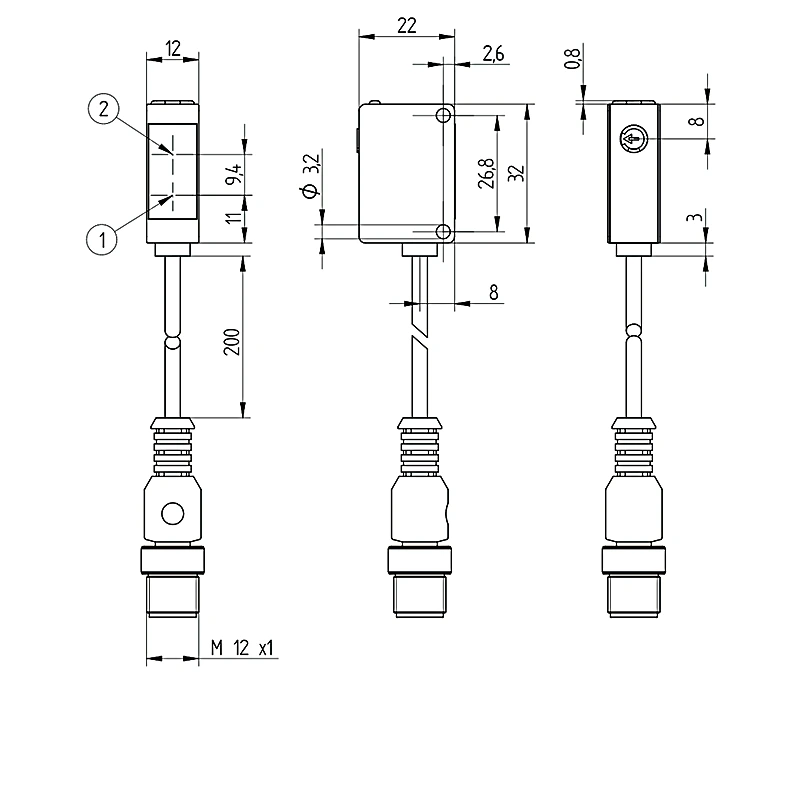
- Connection: M12 × 1; 4-pin
- Cable length (L): 200 mm
- Weight: 21 g
- MTTFd (EN ISO 13849-1): 996.97 a
- Scope of delivery: 1 × initial start-up instructions, 1 × sensor
- PNP NC, PNP NO: yes
- Circuit: NC, NO, NC+NO
- Working Distance: 100 mm, 500 mm, 1000 mm
- Light Spot Diameter: 4 mm, 7 mm, 15 mm
- Complementary Products: PNP-NPN Converter BG2V1P-N-2M
Description
These miniature sensors determine distance between the sensor and the object by means of transit time measurement. wenglor's interference-free technology (wintec) is revolutionizing sensor technology: it prevents numerous sensors arranged directly opposite or next to each other from interfering with one another. The sensors reach a very high switching frequency and use laser class 1, which is safe for the human eye.
Documents
Spec Sheets
Other
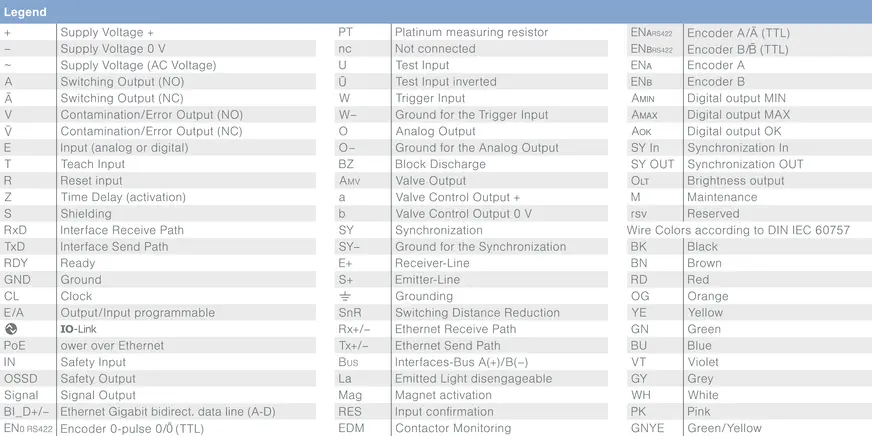
- Wenglor P1KY002 Laser Distance Sensor Time of Flight Connection Diagram-1 (23 KB)
- Wenglor P1KY002 Laser Distance Sensor Time of Flight Connection Diagram-2 (38 KB)
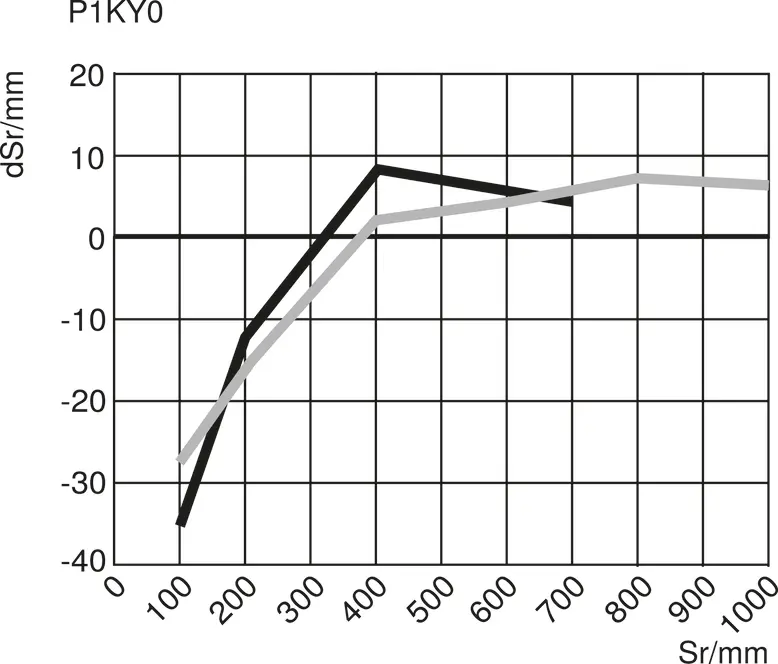
- Wenglor P1KY002 Laser Distance Sensor Time of Flight Switching Distance Deviation-1 (45 KB)
- Wenglor P1KY002 Laser Distance Sensor Time of Flight Switching Distance Deviation-2 (0 KB)
- Wenglor P1KY002 Laser Distance Sensor Time of Flight Switching Distance Deviation-3 (0 KB)
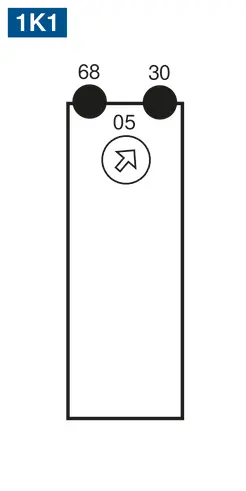
- Wenglor P1KY002 Laser Distance Sensor Time of Flight Ctrl Panel (42 KB)
- Wenglor P1KY002 Laser Distance Sensor Time of Flight Dimensioned Picture (25 KB)
Need Help? Call an engineer at 1-802-880-3123
We're open 8:00 am to 5:30 pm ET